Darolutamide need to used along the standard hormone injections which lower serum Testosterone.
Disclaimer: Please note – This blog is NOT medical advice. This blog is NOT a expert medical opinion on various topics. This blog is purely for information research only and do check the sources where cited. Please DO consult your own doctor to discuss concerns and options, which are relevant and specific to you. The views expressed in this blog are NOT, in any way whatsoever, intended to be a substitute for professional advice. The blog is NOT previewed, commissioned or otherwise endorsed, in any way, by any organisation that the author is associated with. The views expressed in this blog likely represents some of the author’s personal views held at the time of drafting the blog and MAY CHANGE overtime, particularly when new evidence comes to light.
In addition these preservatives– potassium sorbate, potassium metabisulfite, sodium nitrite, acetic acid and sodium acetate– were also found to increase the risk of diabetes”.
Other additives such as “calcium propionate, alpha-tocopherol, sodium ascorbate, rosemary extracts, sodium erythorbate, phosphoric acid and citric acid” were also associated with diabetes risk.
about 85% sulfite intake was from alcoholic drinks;
about 50% of nitrites, 80% of nitrates, and 40% of erythorbates from processed meat.
about 50 % of ascorbates and 25% of citrates from processed fruit and vegetables;
about 30% of tocopherols from breakfast cereals.
With such widespread presence of these preservatives in practically all processed foods, it would be hard to avoid them.
Unless one consumes organic fresh food only, it is hard to avoid additives and preservatives. So the compromise approach would be to minimise processed food as much as possible.
A word of caution. Obviously, with any observational study, there would be unknown factors and we definitely need more confirmatory studies.
References
CNN. Common food preservatives linked to cancer and type 2 diabetes
BMJ. Intake of food additive preservatives and incidence of cancer: results from the NutriNet-Santé prospective cohort BMJ 2026; 392 doi: https://doi.org/10.1136/bmj-2025-084917 (Published 07 January 2026). Cite this as: BMJ 2026;392:e084917
Disclaimer: Please note – This blog is NOT medical advice. This blog is NOT a expert medical opinion on various topics. This blog is purely for information research only and do check the sources where cited. Please DO consult your own doctor to discuss concerns and options, which are relevant and specific to you. The views expressed in this blog are NOT, in any way whatsoever, intended to be a substitute for professional advice. The blog is NOT previewed, commissioned or otherwise endorsed, in any way, by any organisation that the author is associated with. The views expressed in this blog likely represents some of the author’s personal views held at the time of drafting the blog and MAY CHANGE overtime, particularly when new evidence comes to light.
In patients with incurable & widespread prostate cancer, one of the treatment option is a combination of three treatments (“TRIPLET THERAPY”)
This TRIPLET combination involves CHEMOTHERAPY given with HORMONE INJECTIONS and HORMONE TABLETS.
But many prostate cancer patients are frail and elderly with multiple other medical problems. So chemotherapy is not used in those patients and only Hormone tablets and injections are used .
The DOUBLET combination of HORMONE INJECTIONS and HORMONE TABLETS do a good very job indeed and frail patients are spared the nasty side effects from chemotherapy.
A study presented at the annual congress of European Society for Medical Oncology at BERLIN shows that if chemotherapy at a lower dose and is given every 2 weeks rather the typical every 3 weeks , then chemotherapy is better tolerated. The 2 weekly schedule resulted in statistically significant and clinically meaningful reduction in the incidence of severe side effects.
ESMO . LBA92 – 3-weekly docetaxel 75 mg/m2 vs 2-weekly docetaxel 50 mg/m2 in combination with darolutamide + ADT in patients with mHSPC: Results from the randomised phase III ARASAFE trial
Disclaimer: Please note – This blog is NOT medical advice. This blog is NOT a expert medical opinion on various topics. This blog is purely for information research only and do check the sources where cited. Please DO consult your own doctor to discuss concerns and options, which are relevant and specific to you. The views expressed in this blog are NOT, in any way whatsoever, intended to be a substitute for professional advice. The blog is NOT previewed, commissioned or otherwise endorsed, in any way, by any organisation that the author is associated with. The views expressed in this blog likely represents some of the author’s personal views held at the time of drafting the blog and MAY CHANGE overtime, particularly when new evidence comes to light.
The annual congress of European Society for Medical Oncology is currently underway at Berlin. Lot of exciting studies are being presented.
One of the interesting studies relate to bladder cancer. The bladder study looked at the optimum number of chemotherapy cycles that needs to be given.
Chemotherapy do cause significantly more side effects the immunotherapy. If fewer cycles are given, treatment might be more tolerable.
This bladder trial looked at giving only 3 cycles of chemotherapy compared to the standard 6 cycles.
The study found that fewer cycles improved quality of life without compromising overall benefits from the treatment
Reference
Grande E, et al. DISCUS: A phase II study comparing 3 vs 6 cycles of platinum-based chemotherapy prior to maintenance avelumab in advanced urothelial cancer. ESMO Congress 2025 – LBA 109
Disclaimer: Please note – This blog is NOT medical advice. This blog is NOT a expert medical opinion on various topics. This blog is purely for information research only and do check the sources where cited. Please DO consult your own doctor to discuss concerns and options, which are relevant and specific to you. The views expressed in this blog are NOT, in any way whatsoever, intended to be a substitute for professional advice. The blog is NOT previewed, commissioned or otherwise endorsed, in any way, by any organisation that the author is associated with. The views expressed in this blog likely represents some of the author’s personal views held at the time of drafting the blog and MAY CHANGE overtime, particularly when new evidence comes to light.
No; unfortunately routine tests not useful to prolong life.
Logic dictates that early detection of bowel cancer recurrence would lead to prompt treatment and prolong life.
But cancer doesn’t do logic !
A large trial looked at usefulness of routine blood tests and scans for early diagnosis of cancer recurrence in bowel cancer patients.
The trial found that blood tests and scans were useful to diagnose recurrence early; but this early detection of recurrence ultimately did NOT improve life expectancy.
The study used tumour markers in blood [carcinoembryonic antigen CEA ] and Scans [computed tomography CT-scans] during the 5 years after surgery for bowel cancer.
Disclaimer: Please note – This blog is NOT medical advice. This blog is NOT a expert medical opinion on various topics. This blog is purely for information research only and do check the sources where cited. Please DO consult your own doctor to discuss concerns and options, which are relevant and specific to you. The views expressed in this blog are NOT, in any way whatsoever, intended to be a substitute for professional advice. The blog is NOT previewed, commissioned or otherwise endorsed, in any way, by any organisation that the author is associated with. The views expressed in this blog likely represents some of the author’s personal views held at the time of drafting the blog and MAY CHANGE overtime, particularly when new evidence comes to light.
Yes, it can be helpful but only in certain circumstances.
Former US President Biden is in the news this week and multiple media outlets reports that Biden is having radiation therapy to prostate along with hormone therapy.
The news outlets also indicate that Biden has aggressive prostate cancer which has spread to the bones.
Any spread of prostate cancer to bones is classified as stage 4 prostate cancer.
If cancer has NOT spread outside the prostate, the combination of radiation and hormones could be curative .
But, with stage 4 prostate cancer, radiation is generally not curative. This is because once the cancer cells have spread, it is extremely difficult to eradicate those cancer cells permanently.
A large UK trial ( STAMPEDE trials) found that “Radiotherapy to the prostate did NOT improve overall survival for unselected patients with newly diagnosed metastatic prostate cancer”
So if radiation does not improve survival, why did the oncologists offer radiation therapy to Biden?
Full medical details are not available and so it is difficult to give a definitive answer in Biden’s case.
There are few possibilities.
In the above mentioned STAMPEDE trial , in a smaller select group of patients, Radiation therapy did improve overall survival in men with a low metastatic burden. ( ie fewer cells have spread).
One can only speculate whether that’s been the case with regards to Mr Biden.
Disclaimer: Please note – This blog is NOT medical advice. This blog is NOT a expert medical opinion on various topics. This blog is purely for information research only and do check the sources where cited. Please DO consult your own doctor to discuss concerns and options, which are relevant and specific to you. The views expressed in this blog are NOT, in any way whatsoever, intended to be a substitute for professional advice. The blog is NOT previewed, commissioned or otherwise endorsed, in any way, by any organisation that the author is associated with. The views expressed in this blog likely represents some of the author’s personal views held at the time of drafting the blog and MAY CHANGE overtime, particularly when new evidence comes to light.
Disclaimer: Please note – This blog is NOT medical advice. This blog is NOT a expert medical opinion on various topics. This blog is purely for information research only and do check the sources where cited. Please DO consult your own doctor to discuss concerns and options, which are relevant and specific to you. The views expressed in this blog are NOT, in any way whatsoever, intended to be a substitute for professional advice. The blog is NOT previewed, commissioned or otherwise endorsed, in any way, by any organisation that the author is associated with. The views expressed in this blog likely represents some of the author’s personal views held at the time of drafting the blog and MAY CHANGE overtime, particularly when new evidence comes to light.
Disclaimer: Please note – This blog is NOT medical advice. This blog is NOT a expert medical opinion on various topics. This blog is purely for information research only and do check the sources where cited. Please DO consult your own doctor to discuss concerns and options, which are relevant and specific to you. The views expressed in this blog are NOT, in any way whatsoever, intended to be a substitute for professional advice. The blog is NOT previewed, commissioned or otherwise endorsed, in any way, by any organisation that the author is associated with. The views expressed in this blog likely represents some of the author’s personal views held at the time of drafting the blog and MAY CHANGE overtime, particularly when new evidence comes to light.
Disclaimer: Please note – This blog is NOT medical advice. This blog is NOT a expert medical opinion on various topics. This blog is purely for information research only and do check the sources where cited. Please DO consult your own doctor to discuss concerns and options, which are relevant and specific to you. The views expressed in this blog are NOT, in any way whatsoever, intended to be a substitute for professional advice. The blog is NOT previewed, commissioned or otherwise endorsed, in any way, by any organisation that the author is associated with. The views expressed in this blog likely represents some of the author’s personal views held at the time of drafting the blog and MAY CHANGE overtime, particularly when new evidence comes to light.
Multiple new drugs have been developed lung and breast cancers over the last decade.
But only a few new drugs have been approved for ovarian cancers in the past decade.
Drugs like Olaparib and Niraparib – which have been approved for ovarian cancers recently – are maintenance drugs used after chemotherapy rather than used as an upfront treatment .
So it is very good news that a brand new drug is likely to enter the market in the near future.
It has been tested in ovarian cancers which have become resistant to the platinum drugs.
Platinum drugs are the standard of care ovarian cancers and most other drugs do not work very well once ovarian cancers have become resistant to carboplatin or cisplatin (platinum resistant ovarian cancers).
So it is very good news that we may have a new option now for this group of patients with platinum resistant ovarian cancers.
Disclaimer: Please note – This blog is NOT medical advice. This blog is NOT a expert medical opinion on various topics. This blog is purely for information research only and do check the sources where cited. Please DO consult your own doctor to discuss concerns and options, which are relevant and specific to you. The views expressed in this blog are NOT, in any way whatsoever, intended to be a substitute for professional advice. The blog is NOT previewed, commissioned or otherwise endorsed, in any way, by any organisation that the author is associated with. The views expressed in this blog likely represents some of the author’s personal views held at the time of drafting the blog and MAY CHANGE overtime, particularly when new evidence comes to light.
The procedure uses low-energy electricity which impedes cancer cells’ ability to grow and divide.
The procedure is done alongside standard chemotherapy .
The TTFields electric treatments has already been tested and has shown promise in brain tumours and lung cancers.
A study presented at the Chicago ASCO meeting shows better survival in patients who had TTFields electricity in addition to their usual chemotherapy regimen of gemcitabine and abraxane (nab-paclitaxel) for pancreatic cancer.
Weinberg U, Farber O, Giladi M, Bomzon Z, Kirson ED. Tumor treating field concurrent with standard of care for stage 4 non-small cell lung cancer (NSCLC) following platinum failure: Phase III LUNAR study. [abstract]. ESMO, October 2018. Ann Oncol. 2018;29:viii543. doi: 10.1093/annonc/mdy292.120.
Disclaimer: Please note – This blog is NOT medical advice. This blog is NOT a expert medical opinion on various topics. This blog is purely for information research only and do check the sources where cited. Please DO consult your own doctor to discuss concerns and options, which are relevant and specific to you. The views expressed in this blog are NOT, in any way whatsoever, intended to be a substitute for professional advice. The blog is NOT previewed, commissioned or otherwise endorsed, in any way, by any organisation that the author is associated with. The views expressed in this blog likely represents some of the author’s personal views held at the time of drafting the blog and MAY CHANGE overtime, particularly when new evidence comes to light.
Disclaimer: Please note – This blog is NOT medical advice. This blog is NOT a expert medical opinion on various topics. This blog is purely for information research only and do check the sources where cited. Please DO consult your own doctor to discuss concerns and options, which are relevant and specific to you. The views expressed in this blog are NOT, in any way whatsoever, intended to be a substitute for professional advice. The blog is NOT previewed, commissioned or otherwise endorsed, in any way, by any organisation that the author is associated with. The views expressed in this blog likely represents some of the author’s personal views held at the time of drafting the blog and MAY CHANGE overtime, particularly when new evidence comes to light.
When the cancer is advanced , the natural inclination of doctors and patients is chose immediate therapy .
This is the logical and correct thing to do in many cancer patients.
But there are exceptions!
For example, it is well known that some advanced kidney cancer patients can be managed by “active surveillance” or “wait and watch policy” ONLY without any immediate cancer treatment.
A study presented at a Cancer meeting in Chicago confirms that this approach is safe and feasible in “carefully selected” patients.
The study patients who were managed by “active surveillance” or “wait and watch policy” ONLY had preservation of quality of life compared to patients on cancer treatments.
This approach is reassuring but this approach is not for everyone; the study is about kidney cancer patients only. Not other cancers. Patients do need to make an informed choice after discussing the option with their oncologists.
Disclaimer: Please note – This blog is NOT medical advice. This blog is NOT a expert medical opinion on various topics. This blog is purely for information research only and do check the sources where cited. Please DO consult your own doctor to discuss concerns and options, which are relevant and specific to you. The views expressed in this blog are NOT, in any way whatsoever, intended to be a substitute for professional advice. The blog is NOT previewed, commissioned or otherwise endorsed, in any way, by any organisation that the author is associated with. The views expressed in this blog likely represents some of the author’s personal views held at the time of drafting the blog and MAY CHANGE overtime, particularly when new evidence comes to light.
Immunotherapy has revolutionised cancer treatment over the last few years . But, sadly, not all cancer patients derive benefit from the costly immunotherapy drugs.
For instance, almost, all advanced kidney or skin melanoma cancer patients are eligible to try immunotherapy. But only about 1% of patients with pancreatic cancer are at present eligible for immunotherapy .
A new study suggests more people with pancreatic cancer may be eligible for immunotherapy.
The study compared treatment with gemcitabine (G) and nab-paclitaxel (N) with and without dual immunotherapy treatment with durvalumab (D) and tremelimumab (T) as 1st-line therapy in patients with advanced pancreatic cancer.
In this study, only a subset of patients derived benefit from the dual combination therapy.
Subsequent molecular and genetic analysis showed that the presence of certain gene mutations (≥2 DDR) was strongly associated with benefit from the combination of chemotherapy with dual immune checkpoint inhibitor therapy.
These intriguing exploratory data analysis needs confirmatory data before the combination therapy become the standard of care for advanced pancreatic cancer patients.
Disclaimer: Please note – This blog is NOT medical advice. This blog is NOT a expert medical opinion on various topics. This blog is purely for information research only and do check the sources where cited. Please DO consult your own doctor to discuss concerns and options, which are relevant and specific to you. The views expressed in this blog are NOT, in any way whatsoever, intended to be a substitute for professional advice. The blog is NOT previewed, commissioned or otherwise endorsed, in any way, by any organisation that the author is associated with. The views expressed in this blog likely represents some of the author’s personal views held at the time of drafting the blog and MAY CHANGE overtime, particularly when new evidence comes to light.
Disclaimer: Please note – This blog is NOT medical advice. This blog is NOT a expert medical opinion on various topics. This blog is purely for information research only and do check the sources where cited. Please DO consult your own doctor to discuss concerns and options, which are relevant and specific to you. The views expressed in this blog are NOT, in any way whatsoever, intended to be a substitute for professional advice. The blog is NOT previewed, commissioned or otherwise endorsed, in any way, by any organisation that the author is associated with. The views expressed in this blog likely represents some of the author’s personal views held at the time of drafting the blog and MAY CHANGE overtime, particularly when new evidence comes to light.
Many people were shocked by the news that president Joe Biden, aged 82, has been diagnosed with aggressive prostate cancer.
Prostate cancer is quite common in men in their eighties. Nearly two third of men in eighties would have prostate cancer and most of these men do not die of prostate cancer! This is because lot of the cancers in elderly men are low to medium risk.
But men who develop aggressive prostate cancer are at higher risk of death from prostate cancer. Aggressive prostate cancer can spread to bone and other organs.
It has to be pointed out that aggressive prostate cancer is not immediately terminal in vast majority of men, even if the cancer has spread to bone.
Disclaimer: Please note – This blog is NOT medical advice. This blog is NOT a expert medical opinion on various topics. This blog is purely for information research only and do check the sources where cited. Please DO consult your own doctor to discuss concerns and options, which are relevant and specific to you. The views expressed in this blog are NOT, in any way whatsoever, intended to be a substitute for professional advice. The blog is NOT previewed, commissioned or otherwise endorsed, in any way, by any organisation that the author is associated with. The views expressed in this blog likely represents some of the author’s personal views held at the time of drafting the blog and MAY CHANGE overtime, particularly when new evidence comes to light.
The question has been answered by a high quality trial published in the premier medical journal ( New England Journal of Medicine).
Mounjaro is the winner !
Mounjaro is the brand name of the weight loss drug called Tirzepatide.
Mounjaro has come out on the top when it was compared to the other popular weight loss drug called Ozempic.
Ozempic is the brand name of the weight loss drug called semaglutide. Wegovy is another brand name for semaglutide .
A total of 751 participants were invoked in this trial . The trial was conducted very recently between April 2023, and November 2024.
Nearly 20% of those having Mounjaro injections had lost at least 30% of their weight but only about 7% of people having Ozempic/ Wegovy injections lost that amount of weight.
Guardian. People who stop weight loss drugs return to original weight within year, analysis finds (Research raises questions about long-term treatment of and support for people using weight loss drugs). Anna Bawden Health and social affairs correspondent in Málaga. Wed 14 May 2025 20.00 BST
Disclaimer: Please note – This blog is NOT medical advice. This blog is NOT a expert medical opinion on various topics. This blog is purely for information research only and do check the sources where cited. Please DO consult your own doctor to discuss concerns and options, which are relevant and specific to you. The views expressed in this blog are NOT, in any way whatsoever, intended to be a substitute for professional advice. The blog is NOT previewed, commissioned or otherwise endorsed, in any way, by any organisation that the author is associated with. The views expressed in this blog likely represents some of the author’s personal views held at the time of drafting the blog and MAY CHANGE overtime, particularly when new evidence comes to light.
Disclaimer: Please note – This blog is NOT medical advice. This blog is NOT a expert medical opinion on various topics. This blog is purely for information research only and do check the sources where cited. Please DO consult your own doctor to discuss concerns and options, which are relevant and specific to you. The views expressed in this blog are NOT, in any way whatsoever, intended to be a substitute for professional advice. The blog is NOT previewed, commissioned or otherwise endorsed, in any way, by any organisation that the author is associated with. The views expressed in this blog likely represents some of the author’s personal views held at the time of drafting the blog and MAY CHANGE overtime, particularly when new evidence comes to light.
You can buy paracetamol in a supermarket and it (rightly) comes with a big list of side effects .
You can freely buy various vitamins and supplements in supermarkets and none of them come with any warning what so ever.
Because vitamins are heavily promoted over Social media, newspapers, TV, and internet, many people think vitamins are safe and good. So people overindulge hoping for more benefits. But taking too much of vitamins is risky and can cause health problems due to Hypervitaminosis.
So be very careful with extra vitamins and supplements. Check whether you need the supplements at all. Try natural products rather than factory produced artificial supplements.
Disclaimer: Please note – This blog is NOT medical advice. This blog is NOT a expert medical opinion on various topics. This blog is purely for information research only and do check the sources where cited. Please DO consult your own doctor to discuss concerns and options, which are relevant and specific to you. The views expressed in this blog are NOT, in any way whatsoever, intended to be a substitute for professional advice.
The blog is NOT previewed, commissioned or otherwise endorsed, in any way, by any organisation that the author is associated with. The views expressed in this blog likely represents some of the author’s personal views held at the time of drafting the blog and MAY CHANGE overtime, particularly when new evidence comes to light.
A recent paper published in British Medical Journal (BMJ) found that “people who consumed ≥5 servings/week of dark chocolate showed a significantly LOWER risk of developing diabetes”.
The study also found that eating milk-chocolate was bad. Milk-chocolate was associated with weight gain, which is not surprising to everyone.
Any study relating to “health benefits of food and drinks” always needs a healthy dose of scepticism because of commercial industry.
But the beneficial effect of dark chocolate found in this study aligns with previous findings and more research is, of course, needed to clarify and define the mechanisms involved.
So add more dark chocolate to the Christmas hampers !
BMJ 2024: Chocolate intake and risk of type 2 diabetes: prospective cohort studies. BMJ 2024; 387 doi: https://doi.org/10.1136/bmj-2023-078386 (Published 04 December 2024). BMJ 2024;387:e078386
BMJ 2012: The effectiveness and cost effectiveness of dark chocolate consumption as prevention therapy in people at high risk of cardiovascular disease: best case scenario analysis using a Markov model. BMJ 2012; 344 doi: https://doi.org/10.1136/bmj.e3657 (Published 31 May 2012). BMJ 2012;344:e3657
BMJ 2011: Chocolate consumption and cardiometabolic disorders: systematic review and meta-analysis. BMJ 2011; 343 doi: https://doi.org/10.1136/bmj.d4488 (Published 29 August 2011). BMJ 2011;343:d4488
BMJ 2023. Christmas 2023: Champagne problems. Chocolate brownies and calorie restriction: the sweetest paradox? BMJ 2023; 383 doi: https://doi.org/10.1136/bmj.p2585 (Published 20 December 2023). BMJ 2023;383:p2585
Disclaimer: Please note – This blog is NOT medical advice. This blog is NOT a expert medical opinion on various topics. This blog is purely for information only and do check the sources where cited. Please DO consult your own doctor to discuss concerns and options relevant to you. The views expressed in this blog are NOT, in any way whatsoever, intended to be a substitute for professional advice. The blog is NOT previewed, commissioned or otherwise endorsed, in any way, by any organisation that the author is associated with. The views expressed in this blog likely represents some of the author’s personal views held at the time of drafting the blog and MAY CHANGE overtime, particularly when new evidence comes to light.
There are some exceptions to this age limit of 50. For example, men with black ethnicity or those with a family history of prostate cancer are at a higher risk. These men can consider requesting a PSA test in their mid 40s.
A cancer diagnosis is terrifying but it is important to note that NOT Everyman with prostate cancer will die due to prostate cancer. Lot of men with early prostate cancer will die of something else. Moreover, treatment for early prostate cancer has significant side effects.
Even though routine PSA testing is not offered on the NHS, as mentioned in the NHS website “Men aged 50 or over can ask their GP for a PSA test, even if they do not have symptoms”.
Disclaimer: Please note – This blog is NOT medical advice. This blog is NOT a expert medical opinion on various topics. This blog is purely for information only and do check the sources where cited. Please DO consult your own doctor to discuss concerns and options relevant to you. The views expressed in this blog are NOT, in any way whatsoever, intended to be a substitute for professional advice. The blog is NOT previewed, commissioned or otherwise endorsed, in any way, by any organisation that the author is associated with. The views expressed in this blog likely represents some of the author’s personal views held at the time of drafting the blog and MAY CHANGE overtime, particularly when new evidence comes to light.
The question of whether to chose surgery or radiotherapy is a difficult decision for most patients with early prostate cancer.
Adding to this confusion is the option of wait and watch policy followed by delayed treatment (if needed) as supported by PROTECT trial.
A high quality UK trial called PACE-A compared surgery versus Radiation in men with low- to intermediate-risk localised prostate cancer.
At 2 years , the study found more people in surgery group reported using more urinary pads and also more sexual problems than radiotherapy group. But the surgery group reported fewer bowel problems than radiotherapy group.
At present, efficacy is expected to be equivalent between two modalities and long term results in term of efficacy is eagerly awaited
Further more, long term data needed in terms of toxicity . This is because some surgery related side effects tend to remain stable whereas some radiotherapy side effects can increase over time. Particularly relevant is the risk of radiation induced cancers can increase over time time . This would be relevant for slightly younger people (eg 60s) who have longer life expectancy compared to elderly people ( eg 80s) .
Also radiation could be used as salvage therapy ( kept as reserve just in case if cancer comes back after surgery ). Whereas if radiation is given upfront, then surgery as second option is usually not a viable option. The caveat is the most intermediate risk cancer patients do not have a relapse after 1st line therapy.
Disclaimer: Please note – This blog is NOT medical advice. This blog is NOT a expert medical opinion on various topics. This blog is purely for information only and do check the sources where cited. Please DO consult your own doctor to discuss concerns and options relevant to you. The views expressed in this blog are NOT, in any way whatsoever, intended to be a substitute for professional advice. The blog is NOT previewed, commissioned or otherwise endorsed, in any way, by any organisation that the author is associated with. The views expressed in this blog likely represents some of the author’s personal views held at the time of drafting the blog and MAY CHANGE overtime, particularly when new evidence comes to light.
Disclaimer: Please note – This blog is NOT medical advice. This blog is NOT a expert medical opinion on various topics. This blog is purely for information only and do check the sources where cited. Please DO consult your own doctor to discuss concerns and options relevant to you. The views expressed in this blog are NOT, in any way whatsoever, intended to be a substitute for professional advice. The blog is NOT previewed, commissioned or otherwise endorsed, in any way, by any organisation that the author is associated with. The views expressed in this blog likely represents some of the author’s personal views held at the time of drafting the blog and MAY CHANGE overtime, particularly when new evidence comes to light.
Disclaimer: Please note – This blog is NOT medical advice. This blog is NOT a expert medical opinion on various topics. This blog is purely for information only and do check the sources where cited. Please DO consult your own doctor to discuss concerns and options relevant to you. The views expressed in this blog are NOT, in any way whatsoever, intended to be a substitute for professional advice. The blog is NOT previewed, commissioned or otherwise endorsed, in any way, by any organisation that the author is associated with. The views expressed in this blog likely represents some of the author’s personal views held at the time of drafting the blog and MAY CHANGE overtime, particularly when new evidence comes to light.
A study which analysed multiple other studies reports that “Exercise such as walking or jogging, yoga, and strength training were effective in treatment of depression”; the more intense the exercise, better the effect !
The study authors say that “Yoga and strength training were particularly well tolerated” .
The paper published in BMj concludes “Exercise can be considered alongside psychotherapy and antidepressants as core treatments for depression”.
Disclaimer: Please note – This blog is NOT medical advice. This blog is NOT a expert medical opinion on various topics. This blog is purely for information only and do check the sources where cited. Please DO consult your own doctor to discuss concerns and options relevant to you. The views expressed in this blog are NOT, in any way whatsoever, intended to be a substitute for professional advice. The blog is NOT previewed, commissioned or otherwise endorsed, in any way, by any organisation that the author is associated with. The views expressed in this blog likely represents some of the author’s personal views held at the time of drafting the blog and MAY CHANGE overtime, particularly when new evidence comes to light.
Artificial intelligence is the current fashionable technology for investors.
Artificial intelligence is getting incorporated in our daily life.
AI is hyped everywhere .
Would AI make a difference in diagnosis and treatment of cancer patients?
Yes, it will play an important role in choosing the right treatments for individual cancer patient.
At present, a blanket treatment approach is used where subgroups of patients are treated in the same way. Not everyone responds to a particular cancer treatment and some people would develop resistance after an initial response to a particular treatment.
AI can help to move from this blanket treatment approach for whole group of patients
AI can help us move towards a personalised approach; it can help us to predict resistance and response to a particular treatment
AI can help in new drug development.
AI seems to the future
A word of caution. AI is not ready for routine clinical use yet. AI Algorithms need to be validated before day to day clinical use.
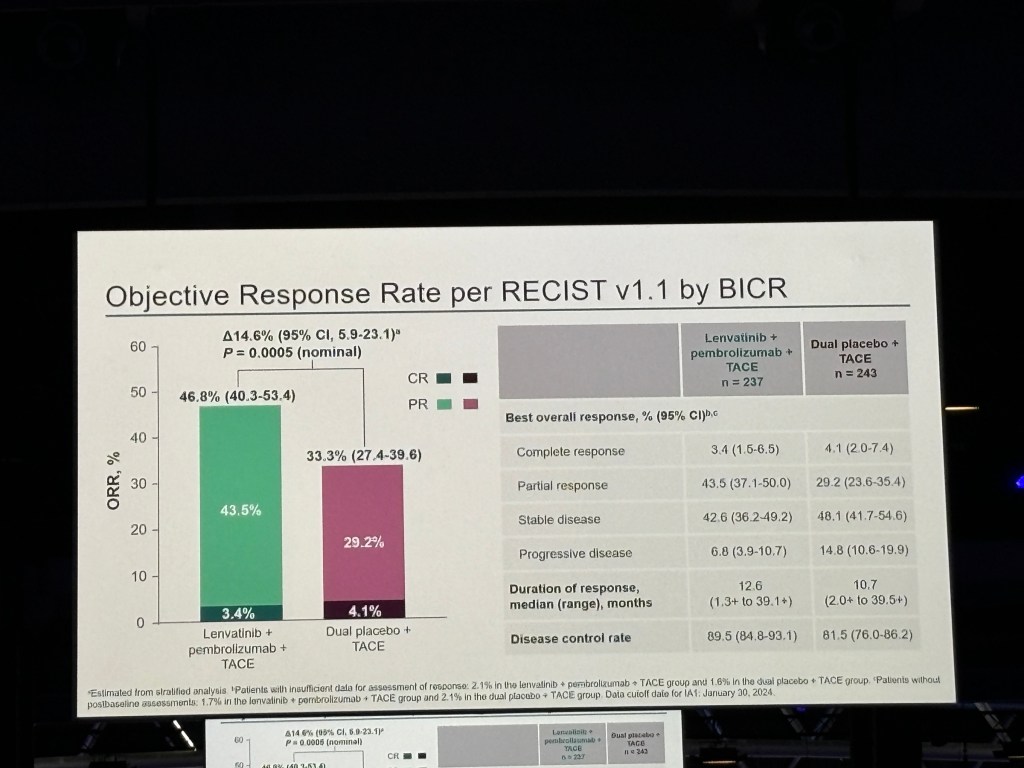
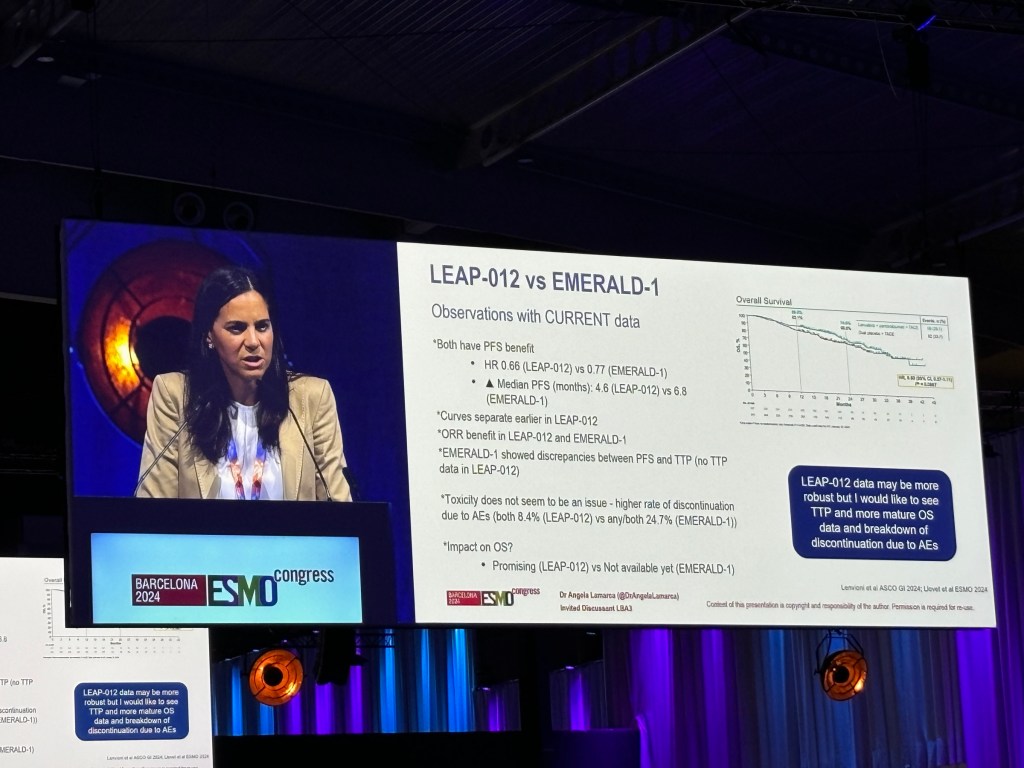
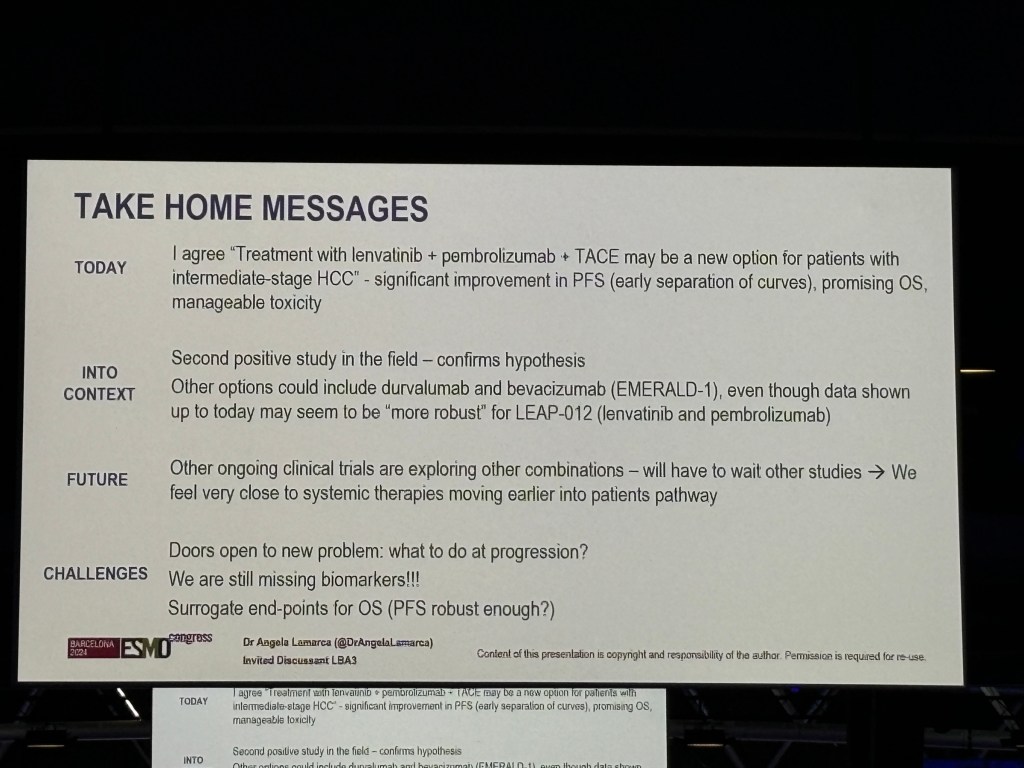
Data presented at the ESMO Congress 2024 (Barcelona, 13–17 September) shows that adding Lenvatinib (tablets) and Pembrolizumab (immunotherapy infusion) to standard treatment has the potential to improve prognosis.
The trial was done in intermediate stage patients.
Adding the combination of Lenvatinib and Pembrolizumab to the other standard treatment TACE seems to work.
The response rates are better with combination and early results are promising but the data is still immature.
Another caveat is that this combination was previously tested in the advanced setting. The combination of Lenvatinib and Pembrolizumab did NOT improve survival in the advanced cancer patient group.
Disclaimer: Please note – This blog is NOT medical advice. This blog is NOT a expert medical opinion on various topics. This blog is purely for information only and do check the sources where cited. Please DO consult your own doctor to discuss concerns and options relevant to you. The views expressed in this blog are NOT, in any way whatsoever, intended to be a substitute for professional advice. The blog is NOT previewed, commissioned or otherwise endorsed, in any way, by any organisation that the author is associated with. The views expressed in this blog likely represents some of the author’s personal views held at the time of drafting the blog and MAY CHANGE overtime, particularly when new evidence comes to light.
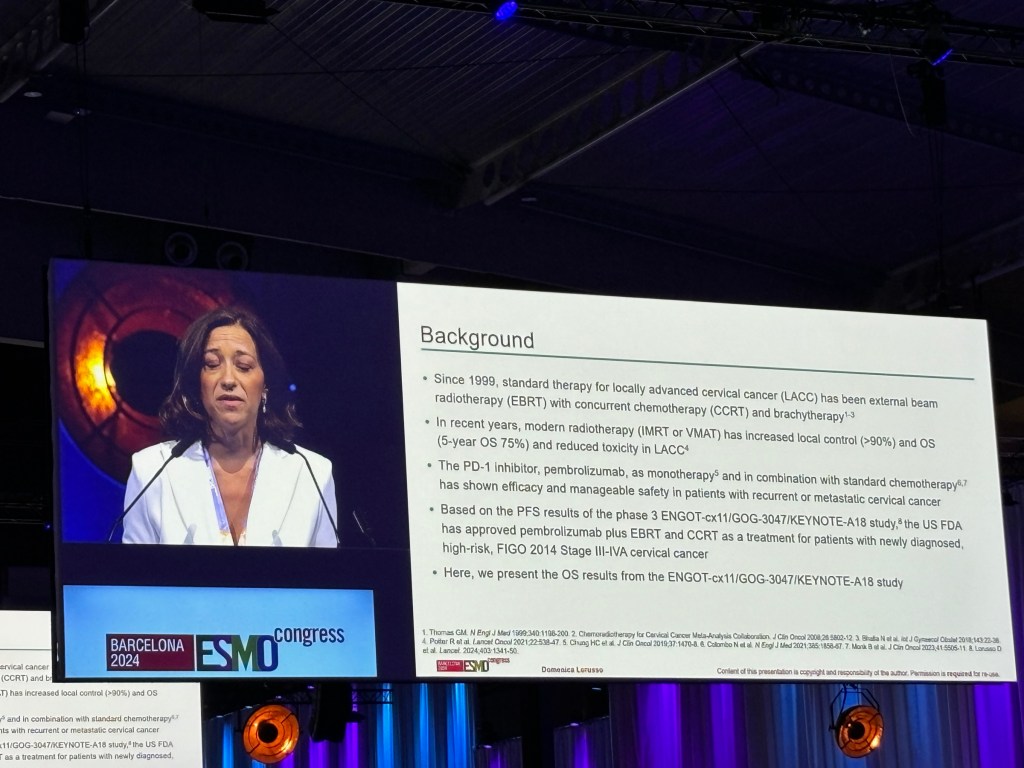
Updated Data presented at the ESMO Congress 2024( Barcelona, 13–17 September) confirms benefit of adding immunotherapy to combination of chemotherapy and radiotherapy for treatment of cervical cancer.
For nearly twenty years, chemo- radiation, which is the practice of giving chemotherapy at the same time as radiotherapy, was the standard of care.
Last year, early results from a large trial suggested that adding immunotherapy to chemo-radiation would improve outcome .
Updated results confirm that the additional immunotherapy is of significant benefit.
Disclaimer: Please note – This blog is NOT medical advice. This blog is NOT a expert medical opinion on various topics. This blog is purely for information only and do check the sources where cited. Please DO consult your own doctor to discuss concerns and options relevant to you. The views expressed in this blog are NOT, in any way whatsoever, intended to be a substitute for professional advice. The blog is NOT previewed, commissioned or otherwise endorsed, in any way, by any organisation that the author is associated with. The views expressed in this blog likely represents some of the author’s personal views held at the time of drafting the blog and MAY CHANGE overtime, particularly when new evidence comes to light.
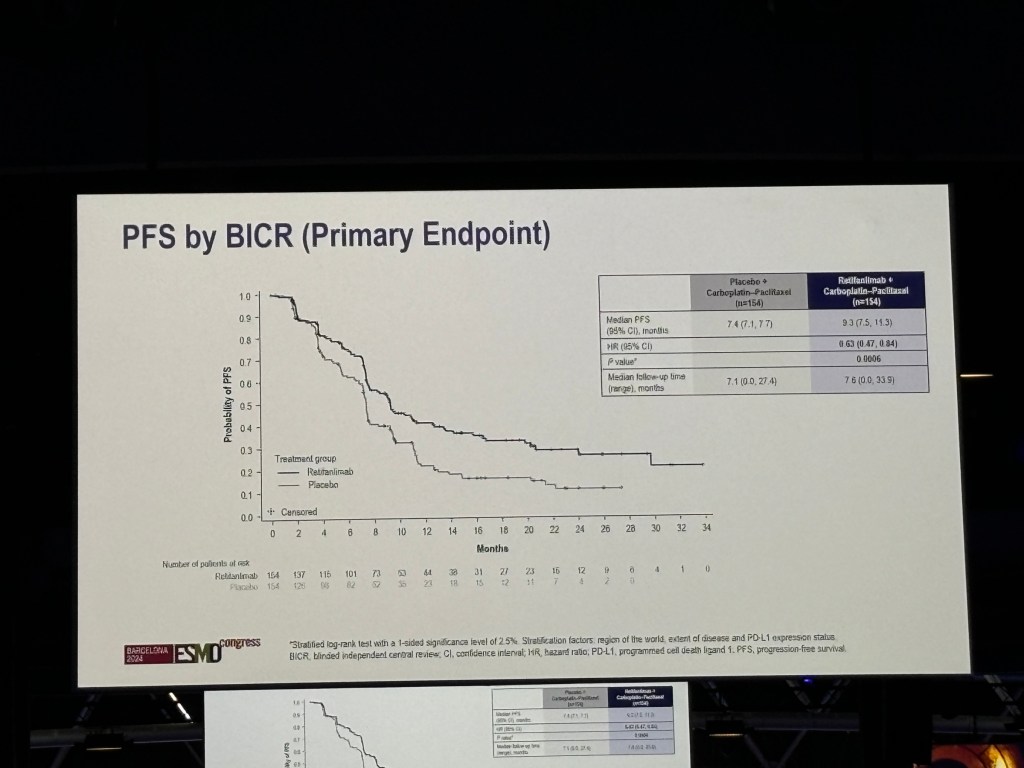
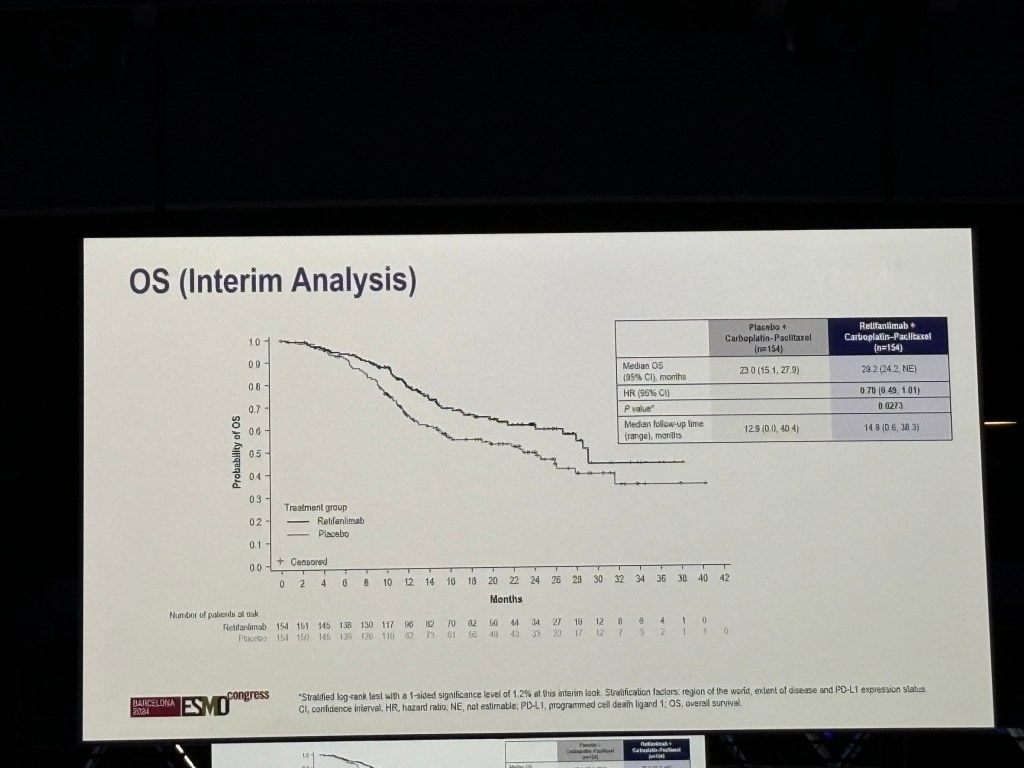
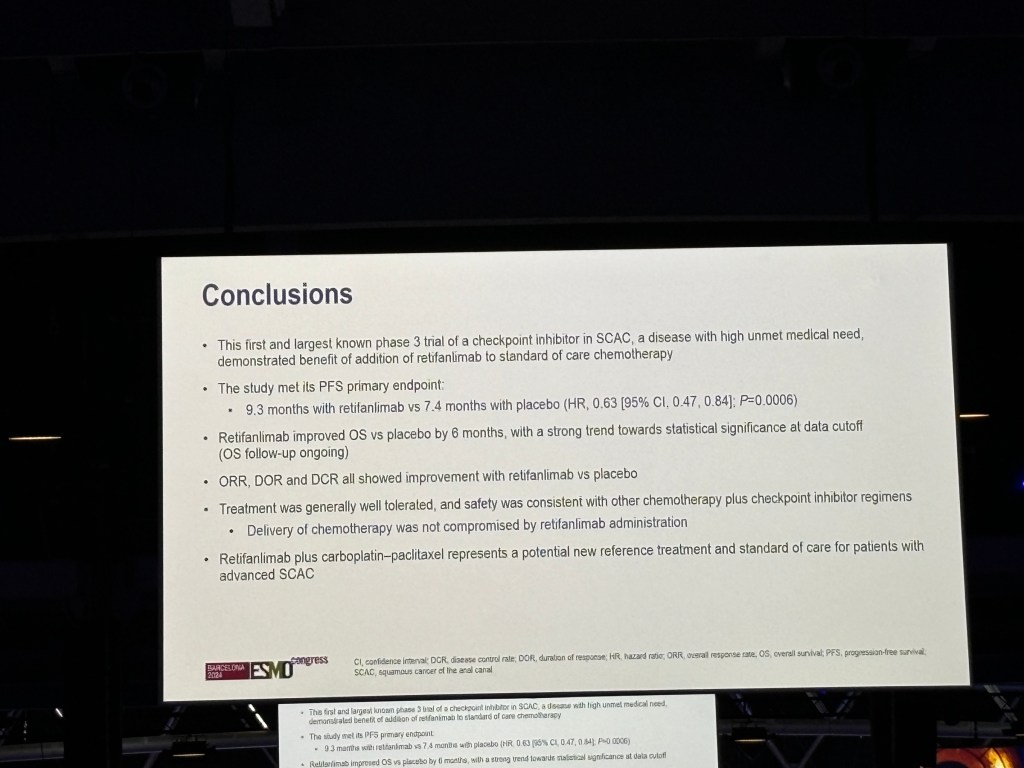
Data presented at the ESMO Congress 2024 (Barcelona, 13–17 September) demonstrated the potential of combining immunotherapy with chemotherapy for advanced anal cancer patients.
Addition of immunotherapy drug retifanlimab to the chemotherapy combination carboplatin and paclitaxel significantly improved the outcomes.
Disclaimer: Please note – This blog is NOT medical advice. This blog is NOT a expert medical opinion on various topics. This blog is purely for information only and do check the sources where cited. Please DO consult your own doctor to discuss concerns and options relevant to you. The views expressed in this blog are NOT, in any way whatsoever, intended to be a substitute for professional advice. The blog is NOT previewed, commissioned or otherwise endorsed, in any way, by any organisation that the author is associated with. The views expressed in this blog likely represents some of the author’s personal views held at the time of drafting the blog and MAY CHANGE overtime, particularly when new evidence comes to light.
Advanced prostate patients were treated with hormone injections only in the past. When these advanced cancer patients were no longer responding to those hormone injections, tablets such as Enzalutamide , Apalutamide and Abiraterone were added to the hormone injections.
A new combination has become available for use in these patients.
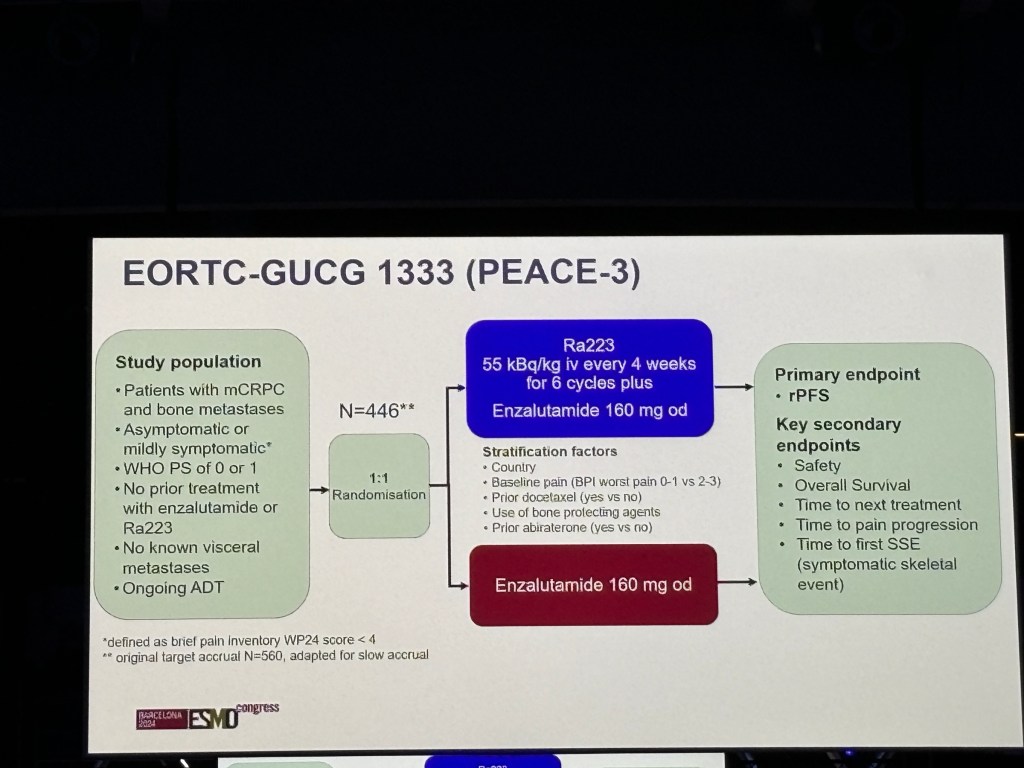
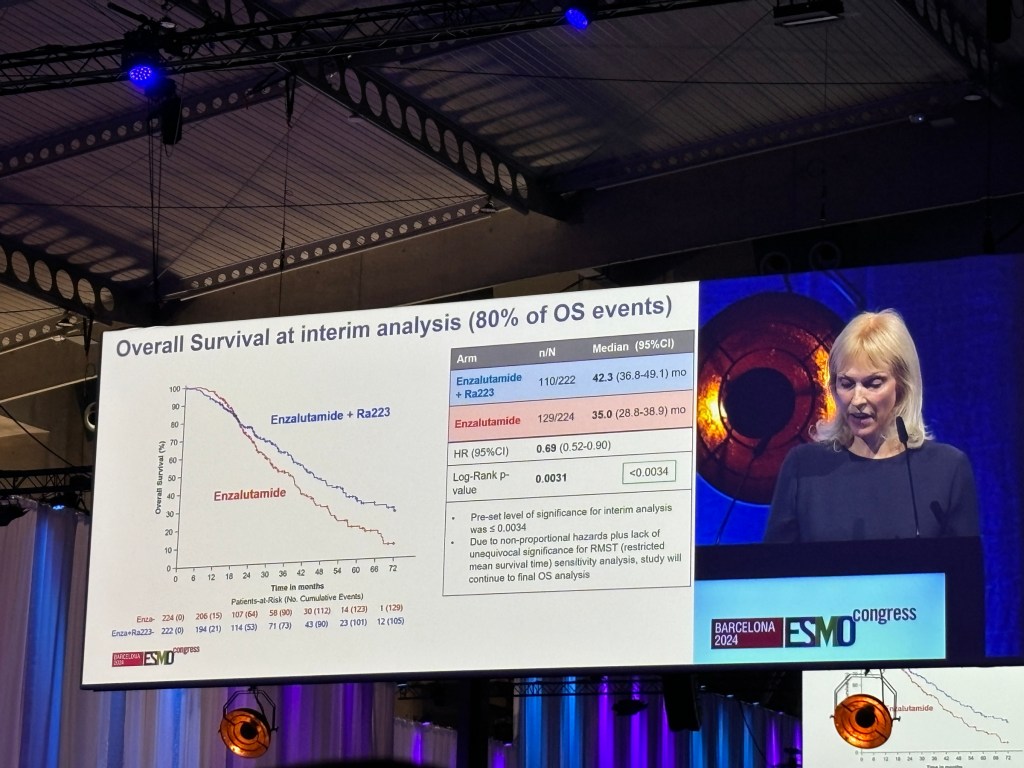
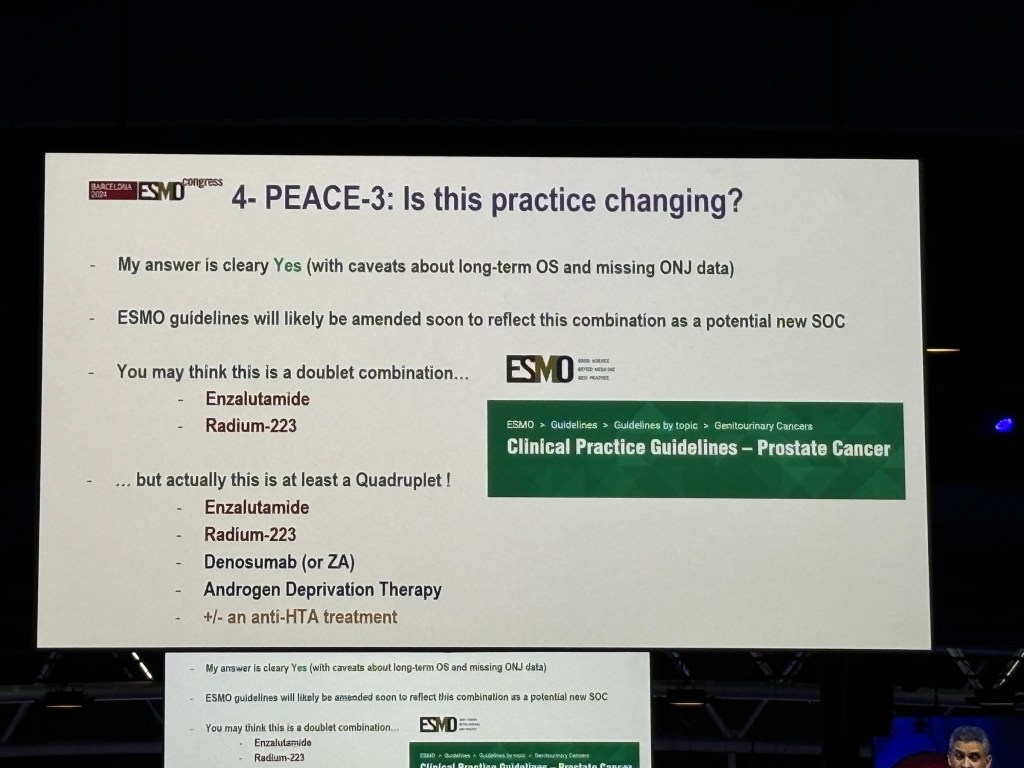
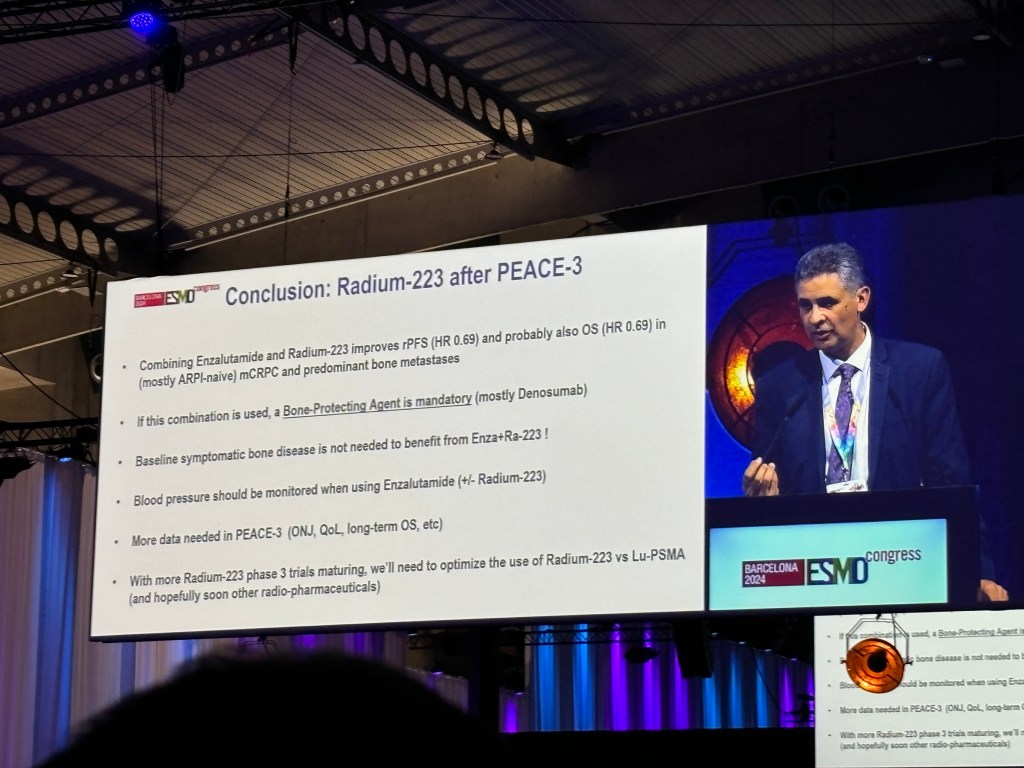
Data presented at the ESMO Congress 2024 (Barcelona, 13–17 September) demonstrated the potential of combining Enzalutamide and Radium 223 injections.
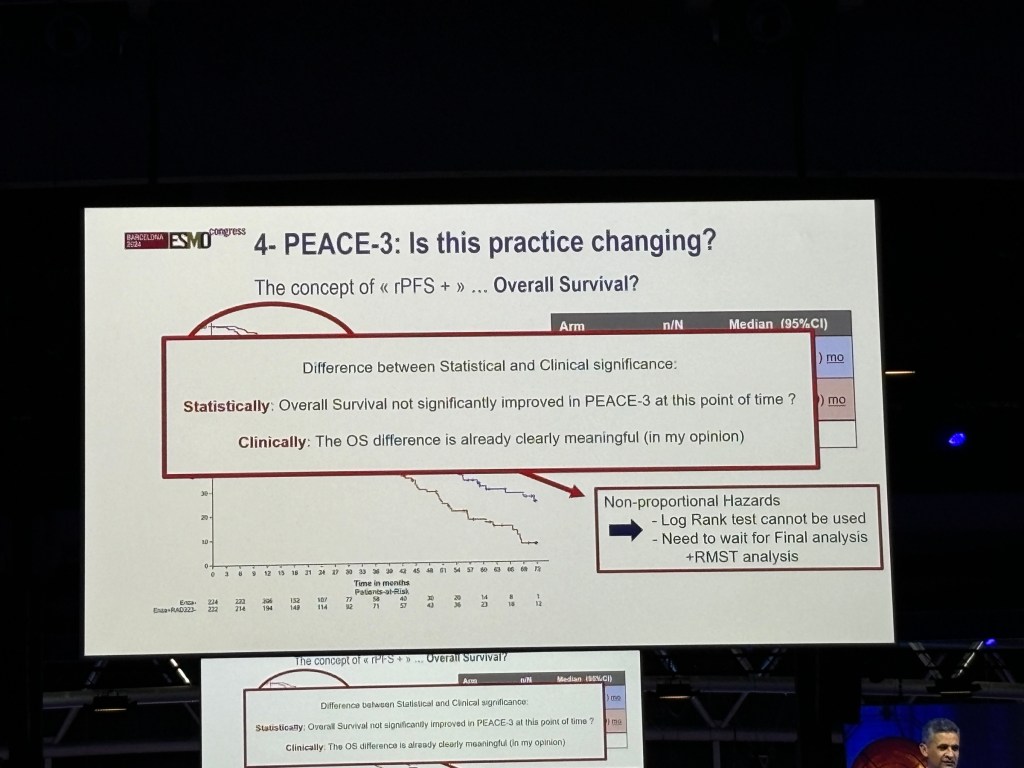
The combination Enzalutamide and Radium 223 injections was better than Enzalutamide tablets alone.
The combination is likely to become a standard of care for these patients.
The only caveat is that a lot of advanced cancer patients are nowadays treated with hormone injections and tablets upfront. This trial data does not directly apply to these patients.
Disclaimer: Please note – This blog is NOT medical advice. This blog is NOT a expert medical opinion on various topics. This blog is purely for information only and do check the sources where cited. Please DO consult your own doctor to discuss concerns and options relevant to you. The views expressed in this blog are NOT, in any way whatsoever, intended to be a substitute for professional advice. The blog is NOT previewed, commissioned or otherwise endorsed, in any way, by any organisation that the author is associated with. The views expressed in this blog likely represents some of the author’s personal views held at the time of drafting the blog and MAY CHANGE overtime, particularly when new evidence comes to light.
Gestational trophoblastic tumours (GTT) are a rare but pregnancy related tumours arising from the placenta
Methotrexate chemotherapy is the sstandard treatment option for low risk GTT tumours .
A new regimen was unveiled at the ESMO European Society of Medical Oncology Congress-2024, Barcelona.
A French trial reported promising results using combination of chemotherapy ( Methotrexate) and immunotherapy (Avelumab)
Disclaimer: Please note – This blog is NOT medical advice. This blog is NOT a expert medical opinion on various topics. This blog is purely for information only and do check the sources where cited. Please DO consult your own doctor to discuss concerns and options relevant to you. The views expressed in this blog are NOT, in any way whatsoever, intended to be a substitute for professional advice. The blog is NOT previewed, commissioned or otherwise endorsed, in any way, by any organisation that the author is associated with. The views expressed in this blog likely represents some of the author’s personal views held at the time of drafting the blog and MAY CHANGE overtime, particularly when new evidence comes to light.
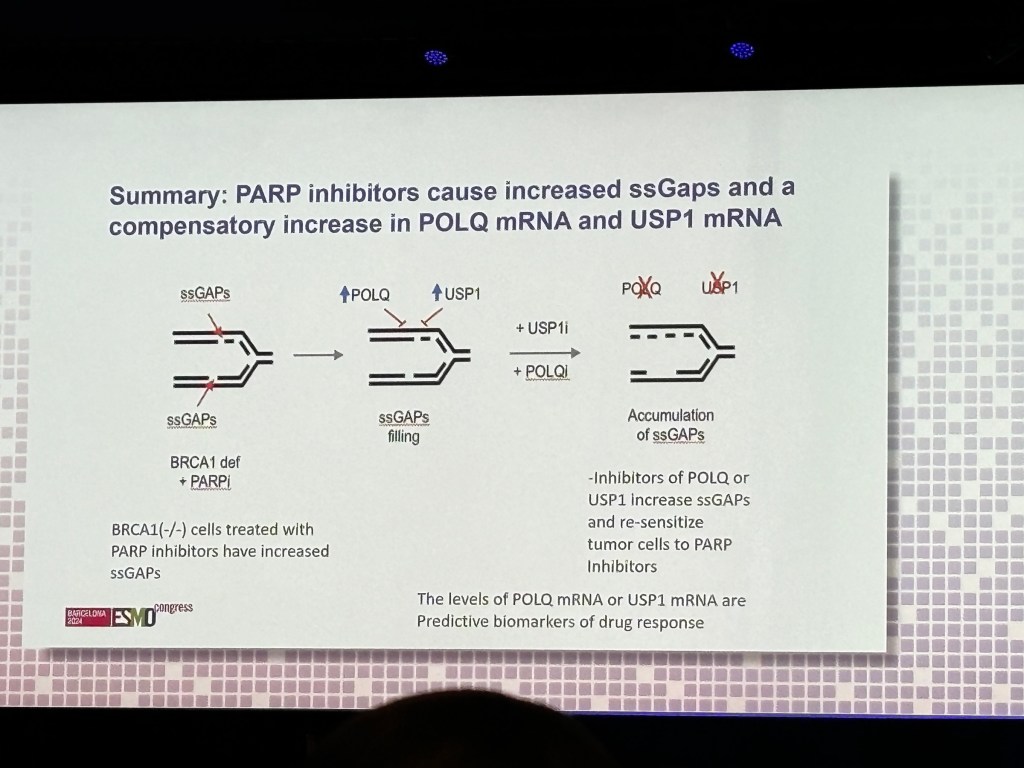
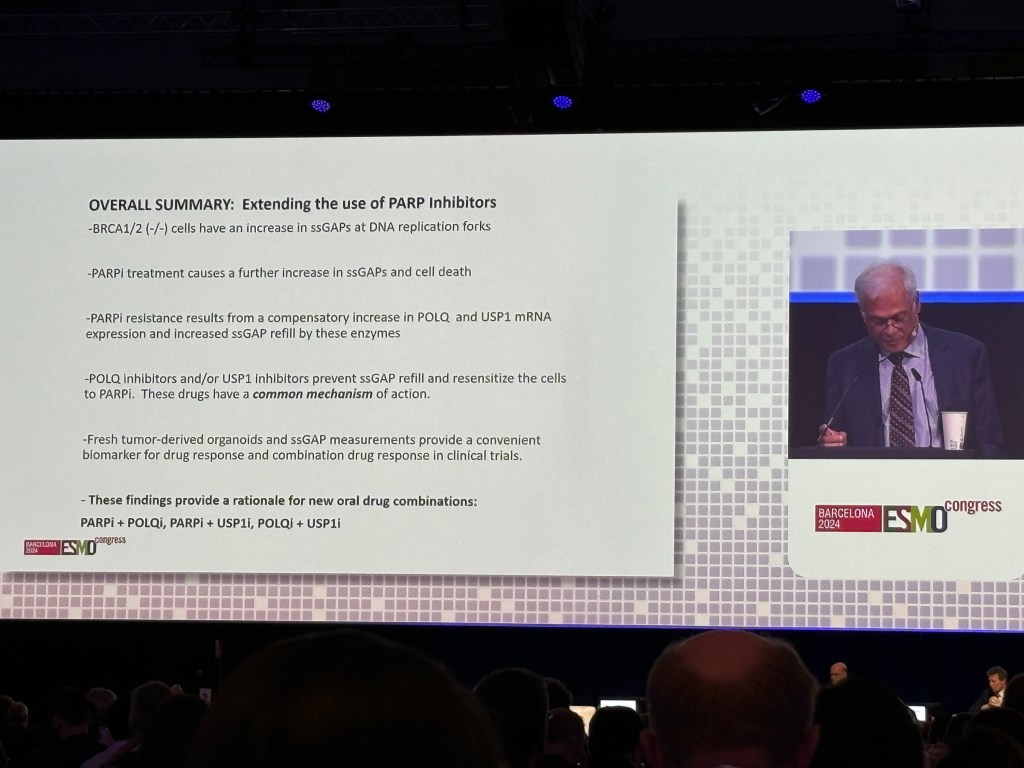
Olaparib and similar drugs have revolutionised the treatment of a sub-set of patients with BRCA gene mutations ( eg Ovarian, Prostate, Breast cancers).
But patients can develop resistance to these drugs.
At the ESMO European Society of Medical Oncology Congress-2024, Barcelona), ways to overcome this resistance was discussed.
Targeting the Enzymes USP-1 and POLQ seems to overcome resistance.
The future looks promising!
Disclaimer: Please note – This blog is NOT medical advice. This blog is NOT a expert medical opinion on various topics. This blog is purely for information only and do check the sources where cited. Please DO consult your own doctor to discuss concerns and options relevant to you. The views expressed in this blog are NOT, in any way whatsoever, intended to be a substitute for professional advice. The blog is NOT previewed, commissioned or otherwise endorsed, in any way, by any organisation that the author is associated with. The views expressed in this blog likely represents some of the author’s personal views held at the time of drafting the blog and MAY CHANGE overtime, particularly when new evidence comes to light.
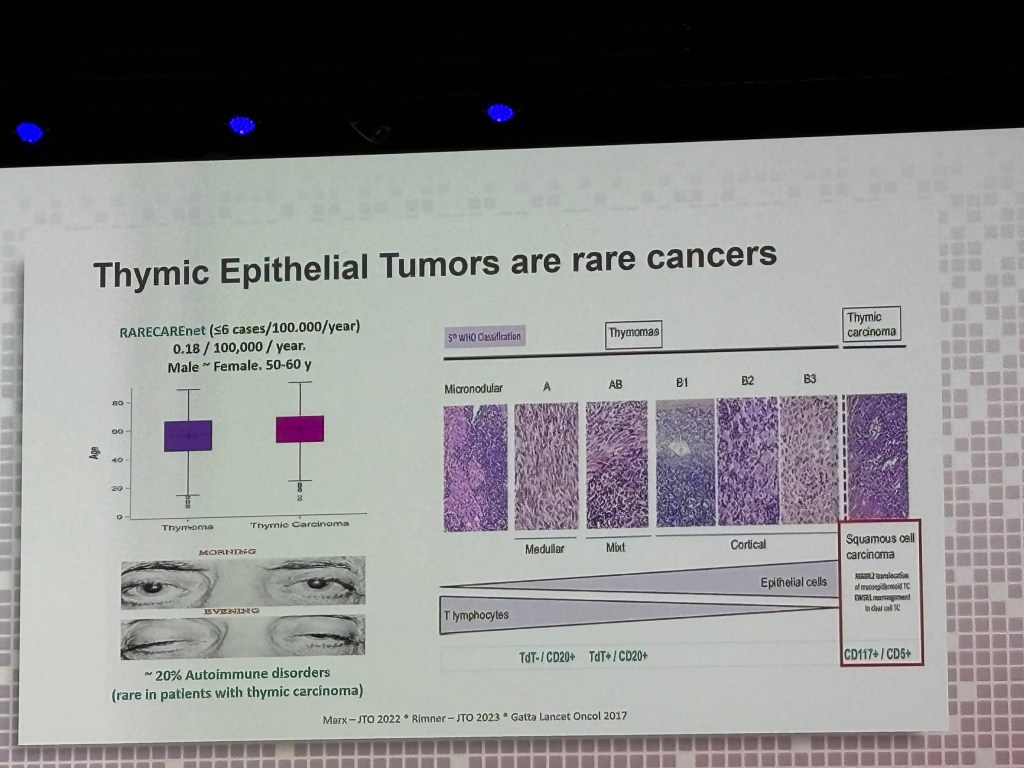
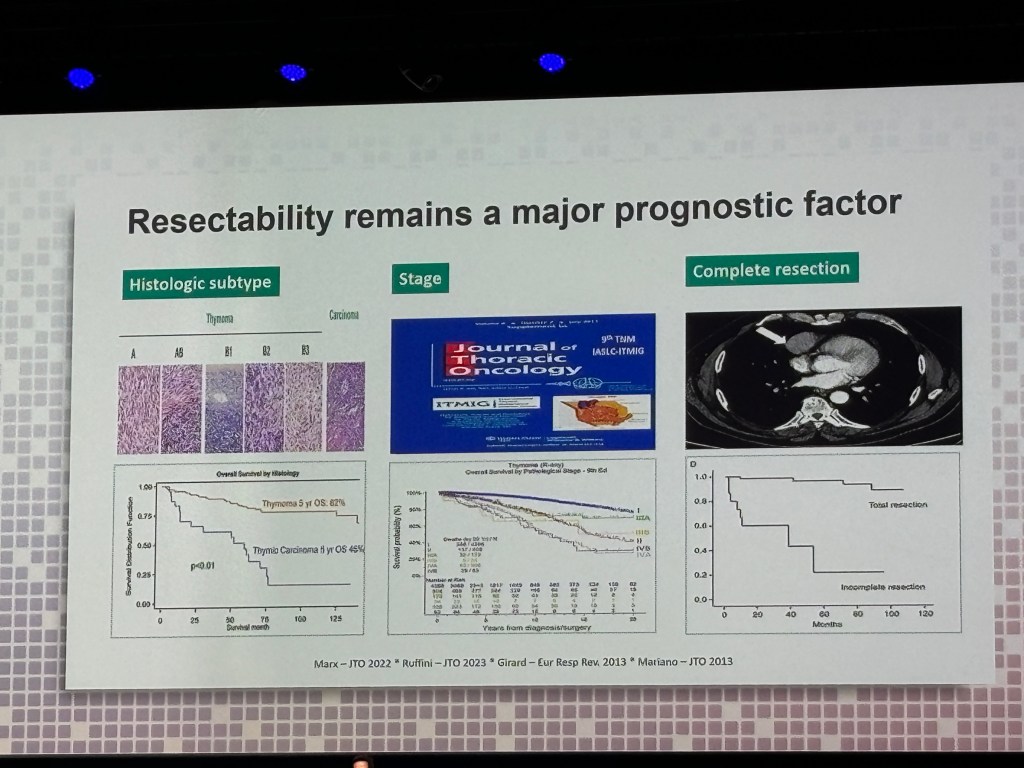
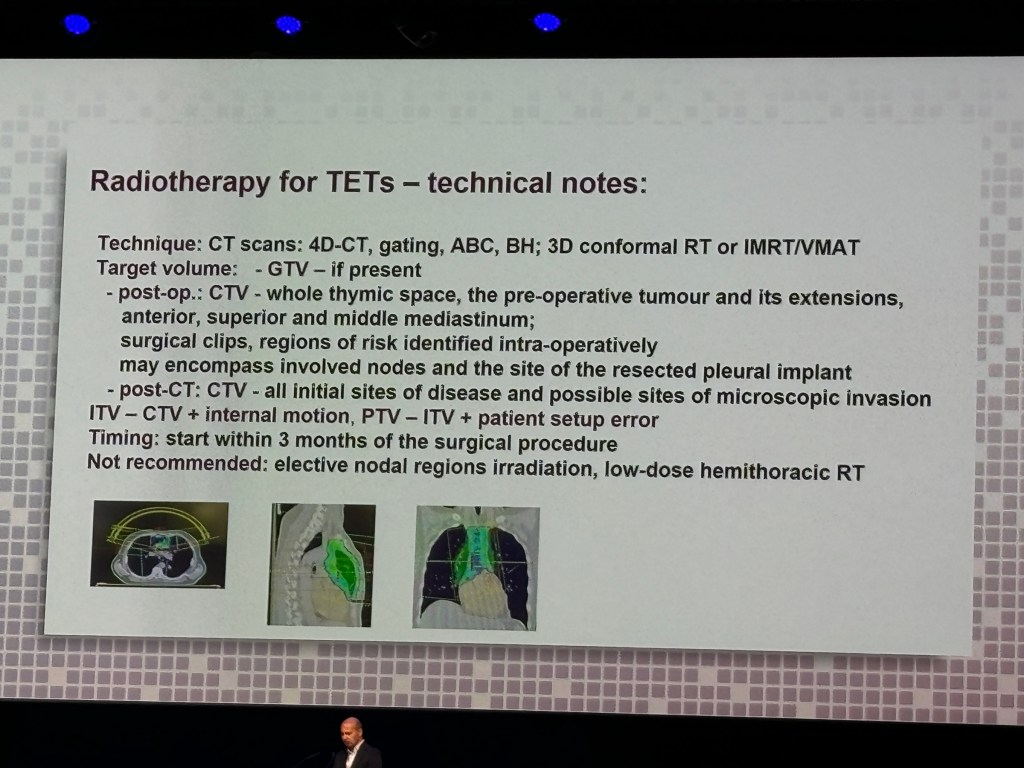
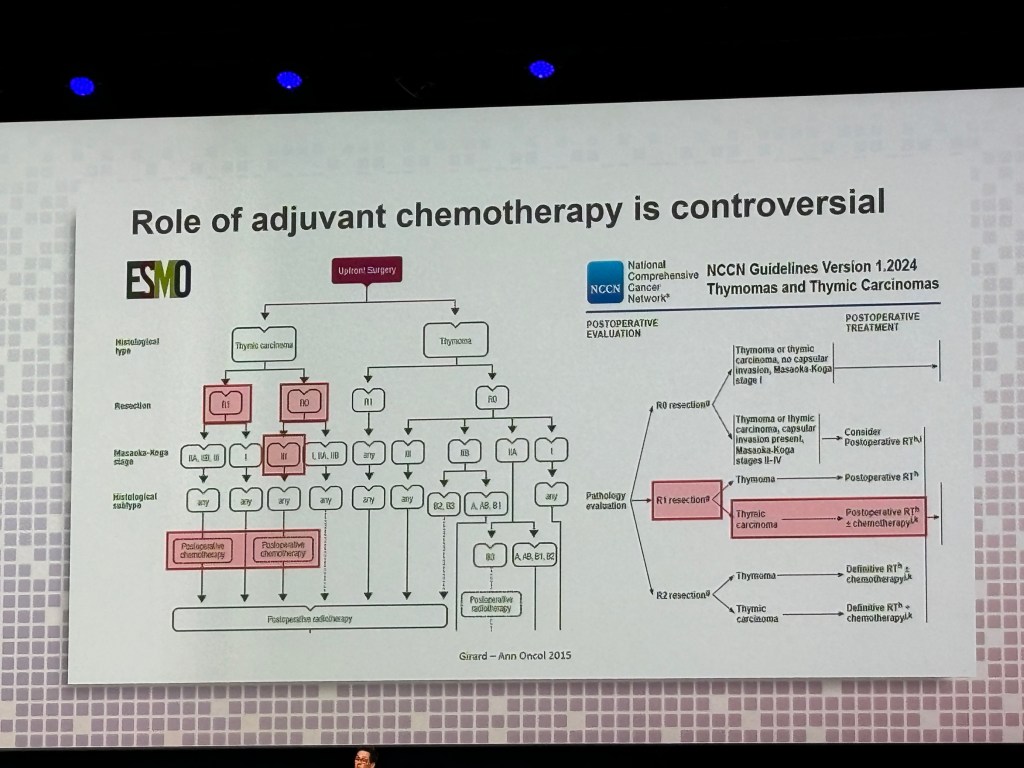
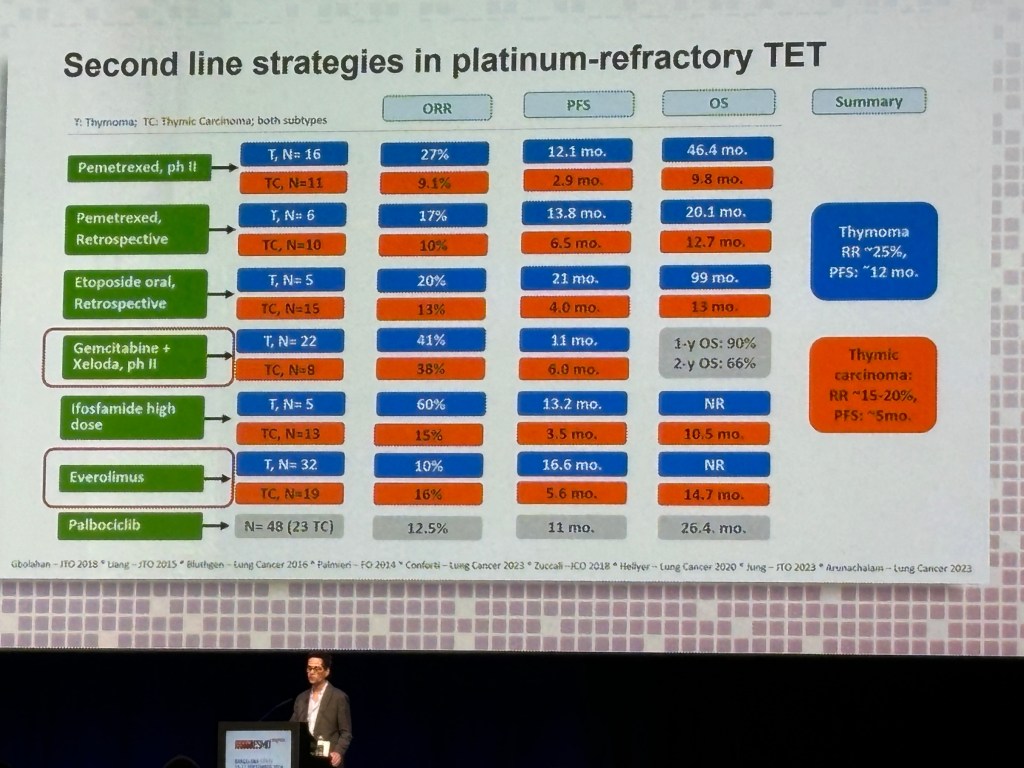
Understandably, in a conference hall meant for thousands of delegates only a few hundreds turned up for the rare thymic tumours ( as delegates attended the 12 other massive halls with simultaneous sessions for common cancers such as prostate, breast , bowel etc).
The relevant updates from this session are:
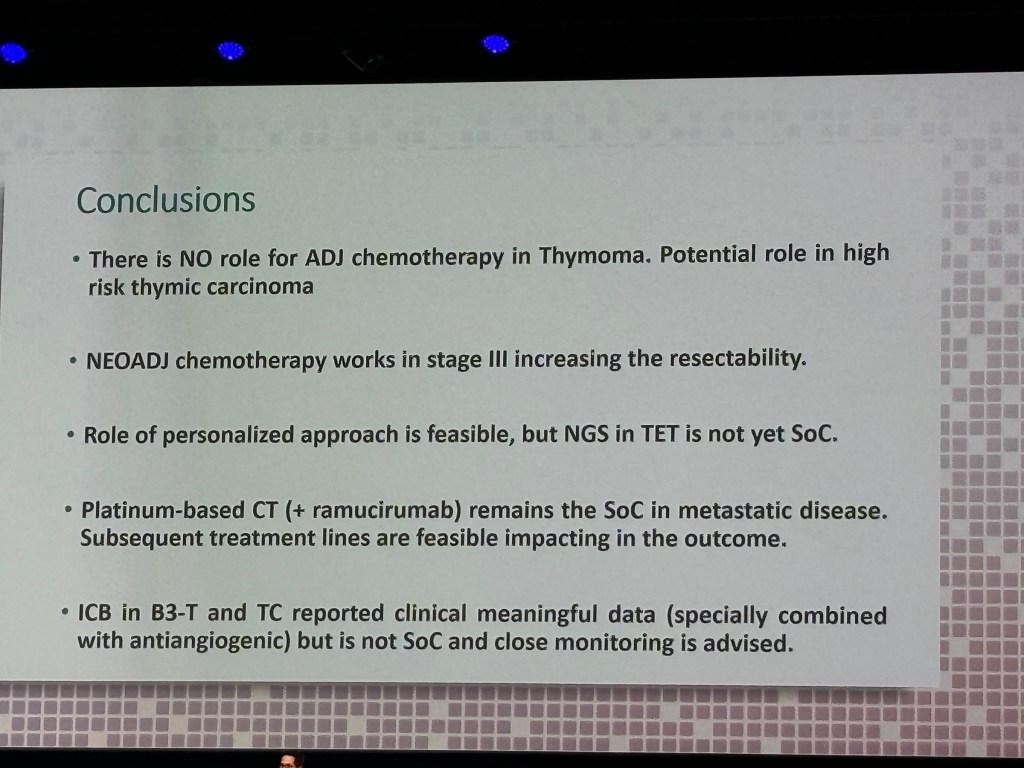
Surgical resection where feasible is the best treatment.
in selected cases , post-operative radiotherapy can be considered
Routine adjuvant chemotherapy after complete surgical excision for early cancers is NOT indicated
Thymic cancers are chemo-sensitive and they have the potential to turn inoperable cancers to operable cancers.
Platinum and Anthracycline combination chemo regimens have the best response rates.
Immunotherapy and Molecular targeted therapy are possible options in those resistant to platinum drugs in addition to other non-platinum chemotherapy drugs .
Disclaimer: Please note – This blog is NOT medical advice. This blog is NOT a expert medical opinion on various topics. This blog is purely for information only and do check the sources where cited. Please DO consult your own doctor to discuss concerns and options relevant to you. The views expressed in this blog are NOT, in any way whatsoever, intended to be a substitute for professional advice. The blog is NOT previewed, commissioned or otherwise endorsed, in any way, by any organisation that the author is associated with. The views expressed in this blog likely represents some of the author’s personal views held at the time of drafting the blog and MAY CHANGE overtime, particularly when new evidence comes to light.
In previous decades, radiotherapy was routinely used to consolidate remission after completion of chemotherapy in Lymphoma patients.
Chemotherapy alone can cure a lot of these patients. Radiotherapy can be associated with long term side effects even 10 years after completion of treatment.
So increasingly there is a tendency to omit radiotherapy in those lymphoma patients who had responded extremely well to chemotherapy alone.
Long term trial results, in a group of lymphoma patients who had mediastinal (chest) lymphoma, confirms that radiotherapy can be safely omitted in those patients who had excellent response to chemotherapy alone.
Disclaimer: Please note – This blog is NOT medical advice. This blog is NOT a expert medical opinion on various topics. This blog is purely for information only and do check the sources where cited. Please DO consult your own doctor to discuss concerns and options relevant to you. The views expressed in this blog are NOT, in any way whatsoever, intended to be a substitute for professional advice. The blog is NOT previewed, commissioned or otherwise endorsed, in any way, by any organisation that the author is associated with. The views expressed in this blog likely represents some of the author’s personal views held at the time of drafting the blog and MAY CHANGE overtime, particularly when new evidence comes to light.
Advanced Kidney cancer can be kept under control for long periods with current treatments.
Combination of immunotherapy and agents targeting VEGF are commonly used in 1st line treatment of advanced Kidney cancers.
For those patients who cancers stop responding to these above treatments, there is good news.
A new agent targeting cancers in a different way has become available recently and updated results are very encouraging.
This new drug called Belzutifan targets a different weak spot in the cancer. Belzutifan has shown better cancer control rates when compared to another drug called Everolimus.
Disclaimer: Please note – This blog is NOT medical advice. This blog is NOT a expert medical opinion on various topics. This blog is purely for information only and do check the sources where cited. Please DO consult your own doctor to discuss concerns and options relevant to you. The views expressed in this blog are NOT, in any way whatsoever, intended to be a substitute for professional advice. The blog is NOT previewed, commissioned or otherwise endorsed, in any way, by any organisation that the author is associated with. The views expressed in this blog likely represents some of the author’s personal views held at the time of drafting the blog and MAY CHANGE overtime, particularly when new evidence comes to light.
Disclaimer: The views expressed in this blog represent the author’s personal views held at the time of drafting the blog and may change overtime, particularly when new evidence comes to light. The blog is NOT previewed, commissioned or otherwise endorsed by any organisation that the author is associated with.
Immunotherapy has dramatically improved the prognosis of skin cancer patients and has made significant improvement in prognosis of kidney, lung, uterus and bladder cancer patients .
Advanced liver cancer is notoriously difficult to treat and prognosis is often poor.
Disclaimer: Please note – This blog is NOT medical advice. This blog is NOT a expert medical opinion on various topics. This blog is purely for information only and do check the sources where cited. Please DO consult your own doctor to discuss concerns and options relevant to you. The views expressed in this blog are NOT, in any way whatsoever, intended to be a substitute for professional advice. The blog is NOT previewed, commissioned or otherwise endorsed, in any way, by any organisation that the author is associated with. The views expressed in this blog likely represents some of the author’s personal views held at the time of drafting the blog and MAY CHANGE overtime, particularly when new evidence comes to light.
Disclaimer: Please note – This blog is NOT medical advice. This blog is NOT a expert medical opinion on various topics. This blog is purely for information only and do check the sources where cited. Please DO consult your own doctor to discuss concerns and options relevant to you. The views expressed in this blog are NOT, in any way whatsoever, intended to be a substitute for professional advice. The blog is NOT previewed, commissioned or otherwise endorsed, in any way, by any organisation that the author is associated with. The views expressed in this blog likely represents some of the author’s personal views held at the time of drafting the blog and MAY CHANGE overtime, particularly when new evidence comes to light.
A recent paper analysed the effect of alcohol in a flight simulator. In healthy individuals, the combined effect of alcohol and low pressure in the flight cabin affected sleep quality and put extra strain on heart.
The authors suggest that these changes noted in these young and healthy individuals could be more detrimental in older people with heart and lung conditions.
The authors advise restricting alcoholic beverages before and during long haul flights.
Disclaimer: Please note – This blog is NOT medical advice. This blog is NOT a expert medical opinion on various topics. This blog is purely for information only and do check the sources where cited. Please DO consult your own doctor to discuss concerns and options relevant to you. The views expressed in this blog are NOT, in any way whatsoever, intended to be a substitute for professional advice. The blog is NOT previewed, commissioned or otherwise endorsed, in any way, by any organisation that the author is associated with. The views expressed in this blog likely represents some of the author’s personal views held at the time of drafting the blog and MAY CHANGE overtime, particularly when new evidence comes to light.
Low risk prostate cancers are sometimes managed by a “wait and watch” approach and frequent monitoring rather than immediate prostate surgery.
Is this approach safe? Yes
A recent report after 10 year follow-up , from a Canadian trial shows that this approach can be safely done with an active monitoring protocol.
In this study, 10 years after diagnosis, half the men were fine without any worsening of their prostate cancer. Reassuringly only less than 2% developed metastatic disease, and less than 1% died of their disease.
These results confirm that “active surveillance” can be an effective management strategy for patients diagnosed with favorable-risk prostate cancer.
Disclaimer: Please note – This blog is NOT medical advice. This blog is NOT a expert medical opinion on various topics. This blog is purely for information only and do check the sources where cited. Please DO consult your own doctor to discuss concerns and options relevant to you. The views expressed in this blog are NOT, in any way whatsoever, intended to be a substitute for professional advice. The blog is NOT previewed, commissioned or otherwise endorsed, in any way, by any organisation that the author is associated with. The views expressed in this blog likely represents some of the author’s personal views held at the time of drafting the blog and MAY CHANGE overtime, particularly when new evidence comes to light.
Skin cancers, which can amendable for surgery, are removed straightaway.
A recent trial indicates giving some immunotherapy treatment before the operation is better than immediate surgery.
Also avoiding additional treatment after surgery in those who have responded well to prior immunotherapy is a bonus through this personalised approach.
Disclaimer: Please note – This blog is NOT medical advice. This blog is NOT a expert medical opinion on various topics. This blog is purely for information only and do check the sources where cited. Please DO consult your own doctor to discuss concerns and options relevant to you. The views expressed in this blog are NOT, in any way whatsoever, intended to be a substitute for professional advice. The blog is NOT previewed, commissioned or otherwise endorsed, in any way, by any organisation that the author is associated with. The views expressed in this blog likely represents some of the author’s personal views held at the time of drafting the blog and MAY CHANGE overtime, particularly when new evidence comes to light.
Disclaimer: Please note – This blog is NOT medical advice. This blog is NOT a expert medical opinion on various topics. This blog is purely for information only and do check the sources where cited. Please DO consult your own doctor to discuss concerns and options relevant to you. The views expressed in this blog are NOT, in any way whatsoever, intended to be a substitute for professional advice. The blog is NOT previewed, commissioned or otherwise endorsed, in any way, by any organisation that the author is associated with. The views expressed in this blog likely represents some of the author’s personal views held at the time of drafting the blog and MAY CHANGE overtime, particularly when new evidence comes to light.
It does take a bit of thinking to get the head around the above two facts.
At present, we use a blood test called PSA ( prostate specific antigen) to detect prostate cancer. It is the most widely used and best available blood test. But it is not perfect.
PSA detects too many “mild cancers” which do not need to be detected because those “mild prostate cancers” do not affect the life expectancy in most men.
The promising results presented at ASCO 2024 meeting in Chicago hopefully will be followed by more confirmatory trials before it becomes standard practice.
Disclaimer: Please note – This blog is NOT medical advice. This blog is NOT a expert medical opinion on various topics. This blog is purely for information only and do check the sources where cited. Please DO consult your own doctor to discuss concerns and options relevant to you. The views expressed in this blog are NOT, in any way whatsoever, intended to be a substitute for professional advice. The blog is NOT previewed, commissioned or otherwise endorsed, in any way, by any organisation that the author is associated with. The views expressed in this blog likely represents some of the author’s personal views held at the time of drafting the blog and MAY CHANGE overtime, particularly when new evidence comes to light.
Princess Kate Middleton, born in 1982, is unlucky to have a cancer diagnosis at such a young age. Many Royal well-wishers are upset and sad about Kate Middleton’s cancer diagnosis and they all wish for an excellent outcome. Since Kate Middleton has announced her cancer diagnosis, there has been understandably a huge interest on survival rates for various abdominal cancers.
Due to privacy concerns the Palace has not revealed the type of cancer but the chemotherapy she is undergoing has termed “preventative” implying that she had a localised cancer which has been successfully removed surgery. It is also implied by many newspapers that the cancer has been found “incidentally” after surgery.
With these caveats, these are the survival rates for various abdominal cancers. This is only a guide, as the cancer can behave vastly differently in various people.
The survival figures quoted are from the publicly available cancer research U.K. (CRUK ) website
Pancreatic cancer: Almost 55 out of 100 people with localised pancreatic cancer er survive their cancer for 1 year or more after diagnosis. Pancreatic cancer is one of the nastiest cancer and only 25% survive their cancer for 3 years or more after diagnosis.
Stomach cancer: England Survival statistics show that 65 out of 100 people (65%) with stage 1 stomach cancer will survive their cancer for 5 years or more after they’re diagnosed.
Gallbladder cancer: American Survival statistics show that More than 65 out of 100 people with localised cancer survive their cancer for 5 years or more after diagnosis.
Small Intestine cancer: More than half (53.0%) of people diagnosed with small intestine cancer in England are predicted to survive their disease for five years or more.
Large Bowel cancer: The survival statistics for early bowel cancer is very optimistic. Around 90 out of 100 people (around 90%) with stage 1 bowel cancer will survive their cancer for 5 years or more after they’re diagnosed and treated.
Ovarian cancer: The survival statistics for early ovarian cancer is also excellent. Almost 95 out of 100 women (almost 95%) will survive their cancer for 5 years or more after they are diagnosed.
Obviously no two people are the same and there are no guarantees with any cancer. Cancer does not spare the well-off in the society.
Disclaimer: Please note – This blog is NOT medical advice. This blog is NOT a expert medical opinion on various topics. This blog is purely for information only and do check the sources where cited. Please DO consult your own doctor to discuss concerns and options relevant to you. The views expressed in this blog are NOT, in any way whatsoever, intended to be a substitute for professional advice. The blog is NOT previewed, commissioned or otherwise endorsed, in any way, by any organisation that the author is associated with. The views expressed in this blog likely represents some of the author’s personal views held at the time of drafting the blog and MAY CHANGE overtime, particularly when new evidence comes to light.
Cancer is a dreadful disease. Advanced cancers are often incurable, even though lot of cancer patients do survive for years with treatment.
With the benefit of hind sight, it is obvious that in some patients, treatment has been futile and toxic chemo treatment could have been stopped early .
It is very difficult to predict who will respond to a particular treatment and who will be harmed by futile chemotherapy , even when someone is very fit.
There is a criticism from some people in medical profession that there is too much futile care towards the end of life in cancer patients.
But cancer patients do often want to fight the cancer and not give up. It is a delicate balance. Read the BMJ piece and contribute your views via rapid response.
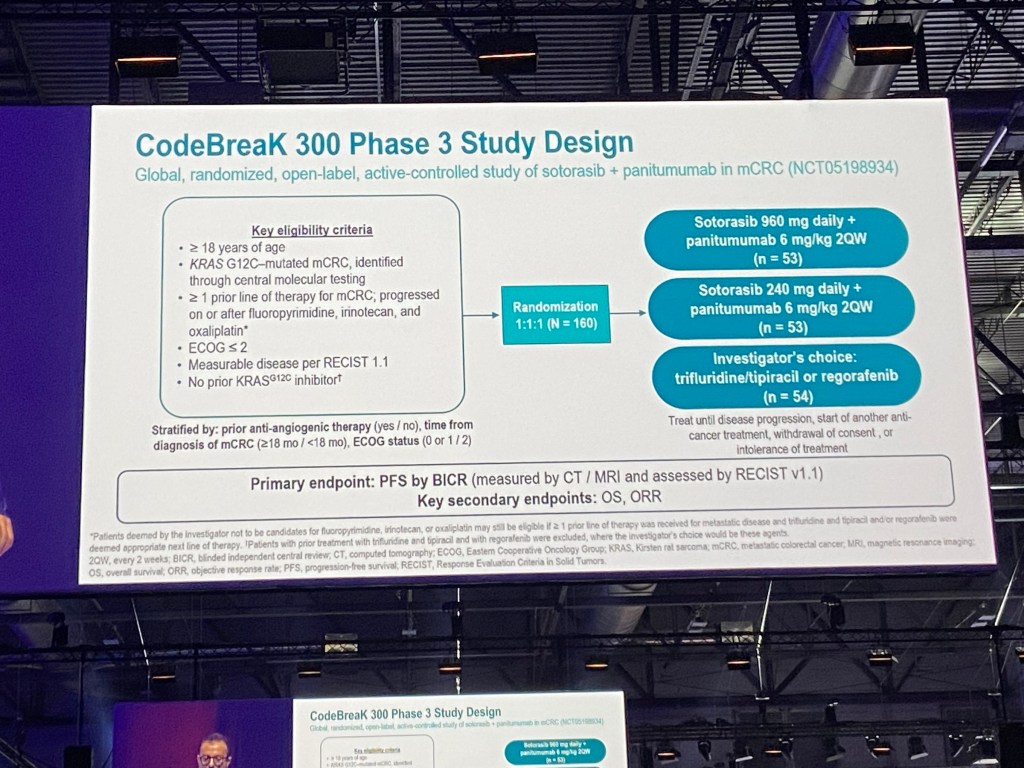
Advanced bowel cancer that has become resistant to prior chemotherapy drugs is always difficult to treat.
A drug combination shows significant activity in this setting.
Sotorasib and Panitumumab are already in use in other settings and hence they will be used very soon in clinics.
Disclaimer: Please note – This blog is NOT medical advice. This blog is NOT a expert medical opinion on various topics. This blog is purely for information only and do check the sources where cited. Please DO consult your own doctor to discuss concerns and options relevant to you. The views expressed in this blog are NOT, in any way whatsoever, intended to be a substitute for professional advice. The blog is NOT previewed, commissioned or otherwise endorsed, in any way, by any organisation that the author is associated with. The views expressed in this blog likely represents some of the author’s personal views held at the time of drafting the blog and MAY CHANGE overtime, particularly when new evidence comes to light.
This year’s ESMO 2023 Conference had breaking news for lot of new drugs in various cancers.
One such drug called Amivantamab is very promising in 1st line as well as 2nd line setting, both in combination with chemotherapy as well as in combination with a new oral drug called lazertinib.
Disclaimer: Please note – This blog is NOT medical advice. This blog is NOT a expert medical opinion on various topics. This blog is purely for information only and do check the sources where cited. Please DO consult your own doctor to discuss concerns and options relevant to you. The views expressed in this blog are NOT, in any way whatsoever, intended to be a substitute for professional advice. The blog is NOT previewed, commissioned or otherwise endorsed, in any way, by any organisation that the author is associated with. The views expressed in this blog likely represents some of the author’s personal views held at the time of drafting the blog and MAY CHANGE overtime, particularly when new evidence comes to light.
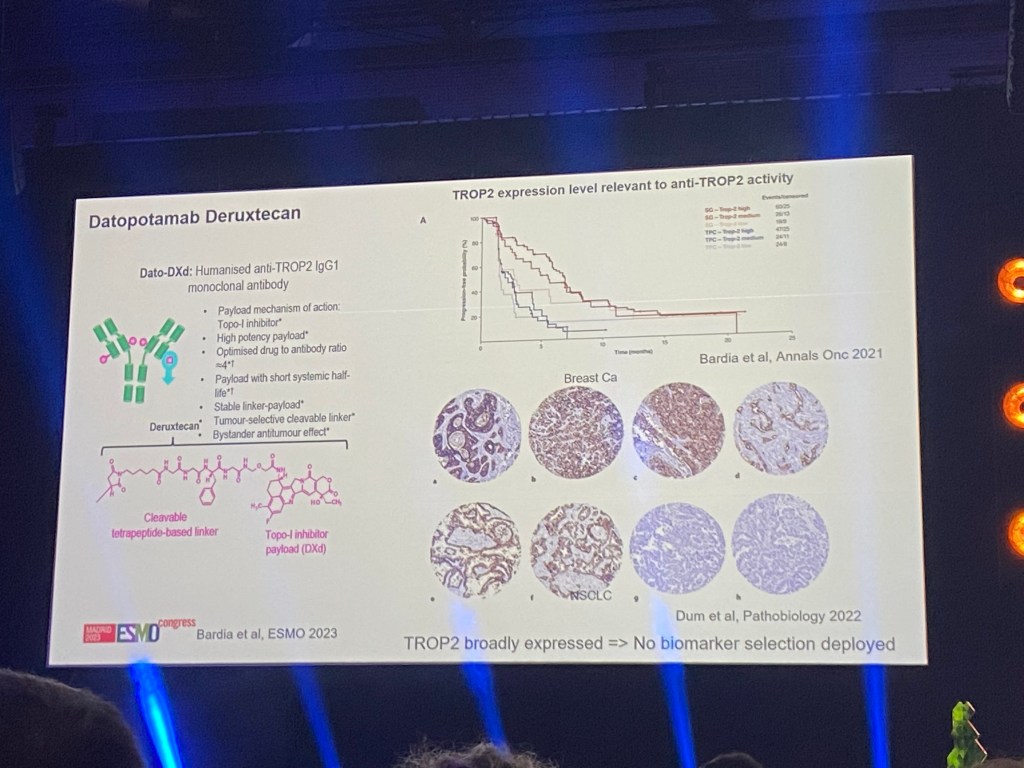
Datopotamab Deruxtecan is a new drug which is known in shorter version as Dato Dxd.
Dato Dxd is very promising in breast cancer and Lung cancers that have failed to respond to prior treatments
Dato Dxd belongs a existing new group of cancer drugs known ADCs ( Antibody drug Conjugate).
ADCs involve a combination of carrier molecule and a payload. ADCs go and stick to surface of cancer cells and off load the chemotherapy drug which in turn damages the cancer cell.
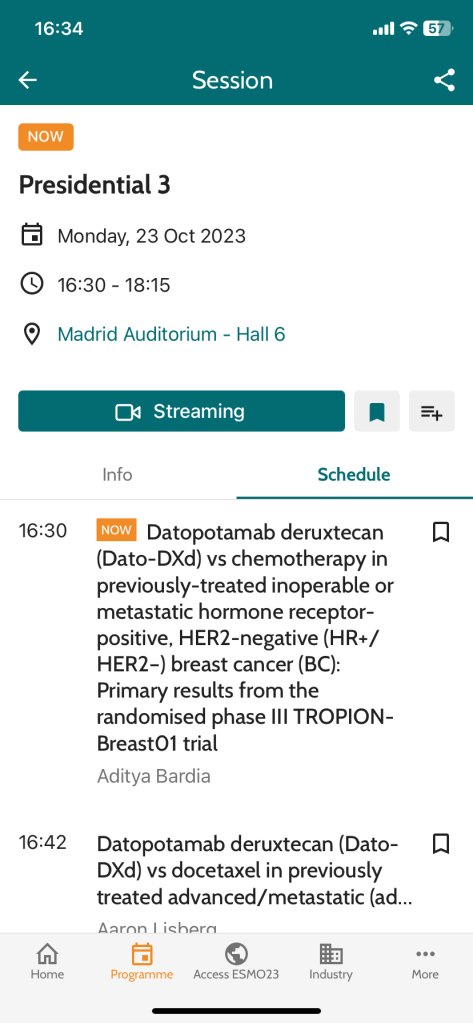
Data presented at the an European Cancer congress in Madrid demonstrates high degree of cancer activity. Hopefully the drug will be available for clinical use very shortly after it has been properly licensed by regulatory authorities.
Disclaimer: Please note – This blog is NOT medical advice. This blog is NOT a expert medical opinion on various topics. This blog is purely for information only and do check the sources where cited. Please DO consult your own doctor to discuss concerns and options relevant to you. The views expressed in this blog are NOT, in any way whatsoever, intended to be a substitute for professional advice. The blog is NOT previewed, commissioned or otherwise endorsed, in any way, by any organisation that the author is associated with. The views expressed in this blog likely represents some of the author’s personal views held at the time of drafting the blog and MAY CHANGE overtime, particularly when new evidence comes to light.
Disclaimer: Please note – This blog is NOT medical advice. This blog is NOT a expert medical opinion on various topics. This blog is purely for information only and do check the sources where cited. Please DO consult your own doctor to discuss concerns and options relevant to you. The views expressed in this blog are NOT, in any way whatsoever, intended to be a substitute for professional advice. The blog is NOT previewed, commissioned or otherwise endorsed, in any way, by any organisation that the author is associated with. The views expressed in this blog likely represents some of the author’s personal views held at the time of drafting the blog and MAY CHANGE overtime, particularly when new evidence comes to light.













































































 Dr S Sundar